May 16, 2026
Should You DIY Your Driveway? A Straight Look at What's Worth Doing Yourself
A paving contractor's no-spin take on driveway DIY — which jobs are genuinely worth doing yourself, which aren't, and why the real cost of DIY isn't money.
We’re a paving company, so you’d expect us to tell you to hire a paving company. But that wouldn’t be straight with you — and being straight is how we’d rather earn your trust. The truth is some driveway and hardscape jobs are genuinely good DIY projects. Others quietly cost you more than they save.
Here’s how to tell the difference.
Jobs that are genuinely worth doing yourself
If the project is small, low-stakes, and forgiving, DIY can be the right call. You’ll save real money and the downside of a mistake is minor:
- Filling a small crack in an otherwise sound asphalt driveway with a tube of crack filler
- Re-sanding the joints of an existing interlock walkway
- Laying a short garden stepping-stone path in the backyard
- Cleaning and weeding an existing paver surface
- Edging or a small decorative border where “good enough” really is good enough
These share three traits: the area is small, the base doesn’t carry vehicle weight, and if it’s slightly imperfect, nothing bad happens. That’s the DIY sweet spot. Go for it.
Jobs where the DIY math quietly falls apart
A full driveway is a different animal — and the reason isn’t the asphalt or pavers you see on top. It’s everything underneath.
A driveway that lasts 20 years is mostly base: excavation to the right depth, the right gravel, graded for drainage, and compacted in layers with a plate compactor or roller. Get the base wrong and the surface fails in a few years no matter how good the top layer looks. Base work needs equipment and experience that a weekend doesn’t supply.
So for a full driveway — asphalt, interlock, or concrete — DIY usually means:
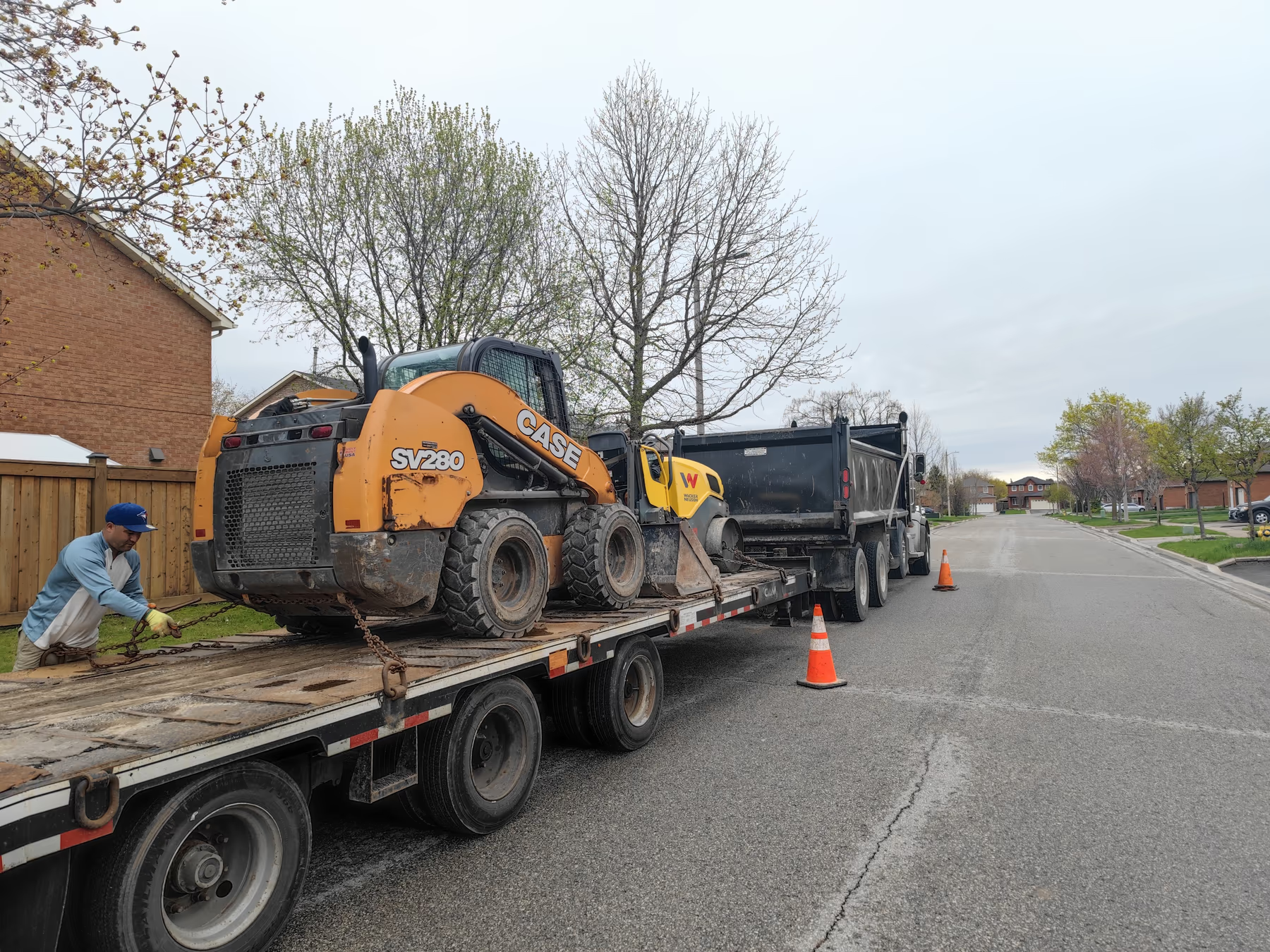
- Renting equipment you don’t own: compactors, possibly a mini excavator, a saw
- Material delivery and waste: asphalt and aggregate come in bulk, with minimums; you’ll likely over-order, and you can’t store the leftovers
- A steep learning curve on the one job you’re learning on — hot asphalt in particular gives you minutes, not hours, to get compaction right
- Redo risk: if the base settles or the surface fails, you’re paying twice — once for the DIY attempt, again to have it done properly
Add those up and the “savings” are often a lot thinner than the sticker math suggested.
The cost nobody puts on the spreadsheet: your time
Here’s the part we think matters most. When people weigh DIY, they compare money. But the bigger number is usually time.
A full driveway is not an afternoon. It’s the planning, the equipment pickup, the material coordination, the physical work, the cleanup — realistically a few full days, often a few weekends, especially on your first one.
So the real question isn’t “can I save some money?” It’s: is two or three weekends fighting a driveway the best use of your time?
For some people, genuinely yes — they enjoy the project, they have the time, the satisfaction is the point. For most people, those weekends are worth more spent elsewhere: with family, on work that pays better than the savings, or simply resting. The money you’d save rarely beats what the time is actually worth to you.
What we’ll tell you
When we come out for an estimate and your project is genuinely a DIY job, we’ll say so. We’d rather give you good advice and earn a real recommendation than talk you into work you didn’t need.
And if it’s a job where DIY would cost you more than it saves — in money, in redo risk, or in weekends you won’t get back — we’ll say that too, and show you exactly what you’d be paying for.
Either way, the estimate is free. Ask us, and we’ll give it to you straight.